%20(1).jpeg)
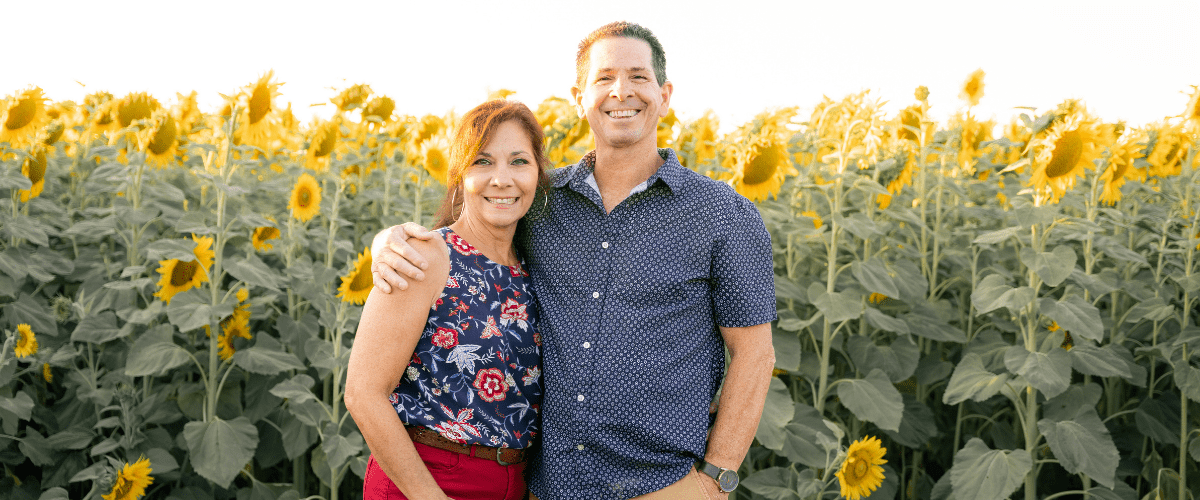
Steven's Story
"On New Year’s Day 2023, I had a stroke. I was watching a football game at my home and was about to take my dog out for a walk during halftime with my wife. I stood up from the couch and noticed something was off. My vision was blurry, like I wasn’t wearing my glasses, and no matter what I tried, I couldn’t make my eyes focus. I individually closed my eyes and realized that there was nothing but grey in my left eye. I was blind. I let my wife know what was happening, and we called urgent care.
By the time we got to urgent care, my vision had restored itself, but the doctors instructed me to go to the ER to make sure there weren’t any lingering issues.
I got to the ER and let the triage nurse know my symptoms, and they got me a bed and continued to monitor me for the next few hours.
The hospital was about to release me, but they did one final test to make sure I was alright, and that’s when all the symptoms that were being masked came to fruition.
I was asked to point at a series of pictures, and while I knew what I was looking at and thought I was pointing correctly, I was kicking my legs instead of using my arms and hands. The doctors kept telling me to point, and every time I tried to tell them “I am pointing,” I couldn’t get the words out. I was mute.
Everyone in the ER knew what was happening, and before I knew it, I was off to get a CT scan.
Everything after that point is a bit blurry, until I woke up in the ICU, unable to move. I heard my wife talking to the nurse, saying something about a stroke. I couldn’t comprehend the severity of the situation and assumed I’d be released in the morning.
I was unable to move. I was barely able to speak, and I couldn’t really make sense of what was going on.
My speech was impaired but came back first, but my thoughts were faster than I was able to say them.
Half of my body was paralyzed, and the doctors went back and forth on what my recovery would look like. One day, it was thought I would be back to normal in a week or so, the next day, they weren’t sure if I’d ever be able to walk again.
The cause of what happened is still unknown, but I had an acute ischemic stroke caused by a dislodged blood clot in my carotid artery.
My saving graces were that I was already at the hospital when I showed the major stroke symptoms, and that I was lucky enough to be in a hospital that had an acute therapy team, where I was able to receive physical, occupational and speech therapy, in-patient, for the next six weeks.
Now, almost 4 years later, I am still impacted physically on the right side of my body and experience some aphasia symptoms when fatigued.
The work doesn’t stop, and the journey continues. And while this is my new normal, I’m able to lead an independent life. I’ve returned to work full-time (with modifications). I help as much as possible around the house. I travel with (and without) my wife and enjoy a majority of the things I enjoyed before the stroke."
.jpeg)
More From Steven
What advice would you give to another stroke survivor?
“Celebrate the little victories and document your recovery. It’s easy to overlook the little things when you’re in it every day, so having something to look back on helps you see all the progress you’ve made.”
What is one thing that has helped you during your recovery?
“It is a work in progress, but I work with a therapist to help practice acceptance and avoid thinking traps. Communication is important, and being confident in asking for help is still a bit of a mental hurdle to overcome.”
He also added, “ My wife has been my biggest supporter and my strongest advocate. Her strength and composure on that day; and everyday since, has been incredible motivation. She helps me get out of my comfort zone and reassures me by being a safety net for when things don’t always go as expected. She is, and has been my rock, and a driving force in my recovery.”
What tools or resources have been helpful in your recovery?
“I go to a personal trainer and do Pilates. I get Botox injections quarterly and use eStim as needed. I have also remained in contact with my therapists at the acute rehab program I was at after my stroke.”
Steven’s story is a reminder that recovery can continue long after leaving the hospital or rehabilitation. Progress may not always be obvious when you are living it every day, which is why his advice to recognize and document the little victories is so meaningful.
Nearly four years after his stroke, Steven is still putting in the work, adapting where needed, and continuing to live independently. His recovery is ongoing — and so is the progress worth celebrating.
%20(1).png)